Joule's 'mechanical equivalent' of heat |
|
In 1843 he announced that he had measured 'the mechanical equivalent of heat' (the amount of mechanical work needed to produce a given amount of heat) in a longer paper that was obscure and very difficult to understand. He was again ignored. At last, in 1847, William Thomson (later Lord Kelvin) endorsed his findings. In 1849, a paper entitled 'On the Mechanical Equivalent of Heat' was read to the Royal Society by Kelvin and in 1844 they published it. Joule was recognized, accepted into intelligent circles, and elected a member, but he remained a simple man, with few manners. |
|
> More |
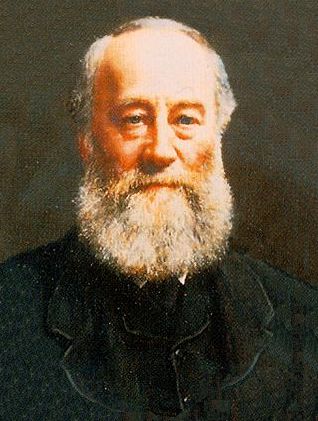 Joule is a hero to
all self made men. Born in England on Dec 24, 1818, he was a
home-schooled sickly child, until in 1833, when his father died,
he went to manage the family brewery. He continued his education
part time, with a famous private tutor named John Dalton, set
up a laboratory at home, and experimented before and after work.
In 1840 he sent his first paper, 'On the Production of Heat
by Voltaic Electricity' to the Royal Society in London. The
society didn't know who he was, and published only a brief summary.
Joule is a hero to
all self made men. Born in England on Dec 24, 1818, he was a
home-schooled sickly child, until in 1833, when his father died,
he went to manage the family brewery. He continued his education
part time, with a famous private tutor named John Dalton, set
up a laboratory at home, and experimented before and after work.
In 1840 he sent his first paper, 'On the Production of Heat
by Voltaic Electricity' to the Royal Society in London. The
society didn't know who he was, and published only a brief summary.