|
||||||||||

Factors Influencing the Rate of Enzymatic Reactions
Introduction:
Catalase is an enzyme found in most living cells that catalyzes the decomposition of hydrogen peroxide into water and oxygen. Enzymes are specialized proteins which increase the speed of biological or chemical reactions and can speed up these reactions by a factor of many thousand times. An enzyme is unchanged by reactions and continues to function as a catalyst unless it becomes denatured; the enzyme is re-usable. Another important part of the lab is hydrogen peroxide.
The pH is the symbol for the ratio between hydrogen ions and hydroxide ions. It is used on a scale of 0 – 14 to express the acidity or alkalinity of a solution. A pH of 7 is where hydrogen and hydroxide ions equal each other and form a neutral solution. A pH of less than 7 is where hydrogen ions outnumber hydroxide ions and represents acidity. A pH of more than 7 is where hydroxide ions outnumber hydrogen ions and represents alkalinity. Hydrogen peroxide is an unstable compound, which is used especially as an oxidizing and bleaching agent and as an antiseptic.Hydrogen peroxide is the liquid that is sometimes used to clean cuts on skin. The peroxide bubbles due to its reaction with catalase and causes a decomposition reaction; it is reacting with the catalase in the bloodstream and producing oxygen gas. Since bacteria do not have catalase, the wound becomes disinfected as the bacteria are killed.
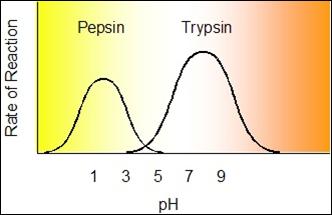
Figure 1: The graph illustrated that different enzymes have different pH in which they optimally operate.
All cells in the human body produce hydrogen peroxide. Sometimes hydrogen peroxide is produced as part of the immune system’s way of killing bacteria or sometimes it is the byproduct of metabolism. Although this process may seem quite ironic, the body must have a way in which to protect itself against the hydrogen peroxide it produces. This is also where catalase comes in; it converts hydrogen peroxide into harmless water and oxygen gas. The pressure coming from oxygen will be measured using Gas Pressure Sensors. The released pressure from the oxygen when catalase is added to hydrogen peroxide is measured in the unit “kPa”, which is the abbreviation of “kilopascal”. One Pascal of pressure is about the pressure felt when holding a piece of paper. This formula for hydrogen peroxide and catalase reaction is as follows: